

Quick answer
The gold coast whale watching best time spans June through October, when approximately 30,000 humpback whales pass the Queensland coastline during their annual Antarctic-to-equator migration. Peak sighting density occurs in July and August during the northward journey, with September offering active calf behaviour as mothers shepherd newborns south. Morning departures between 08:30 and 11:00 typically encounter calmer seas and higher whale activity before afternoon wind picks up.
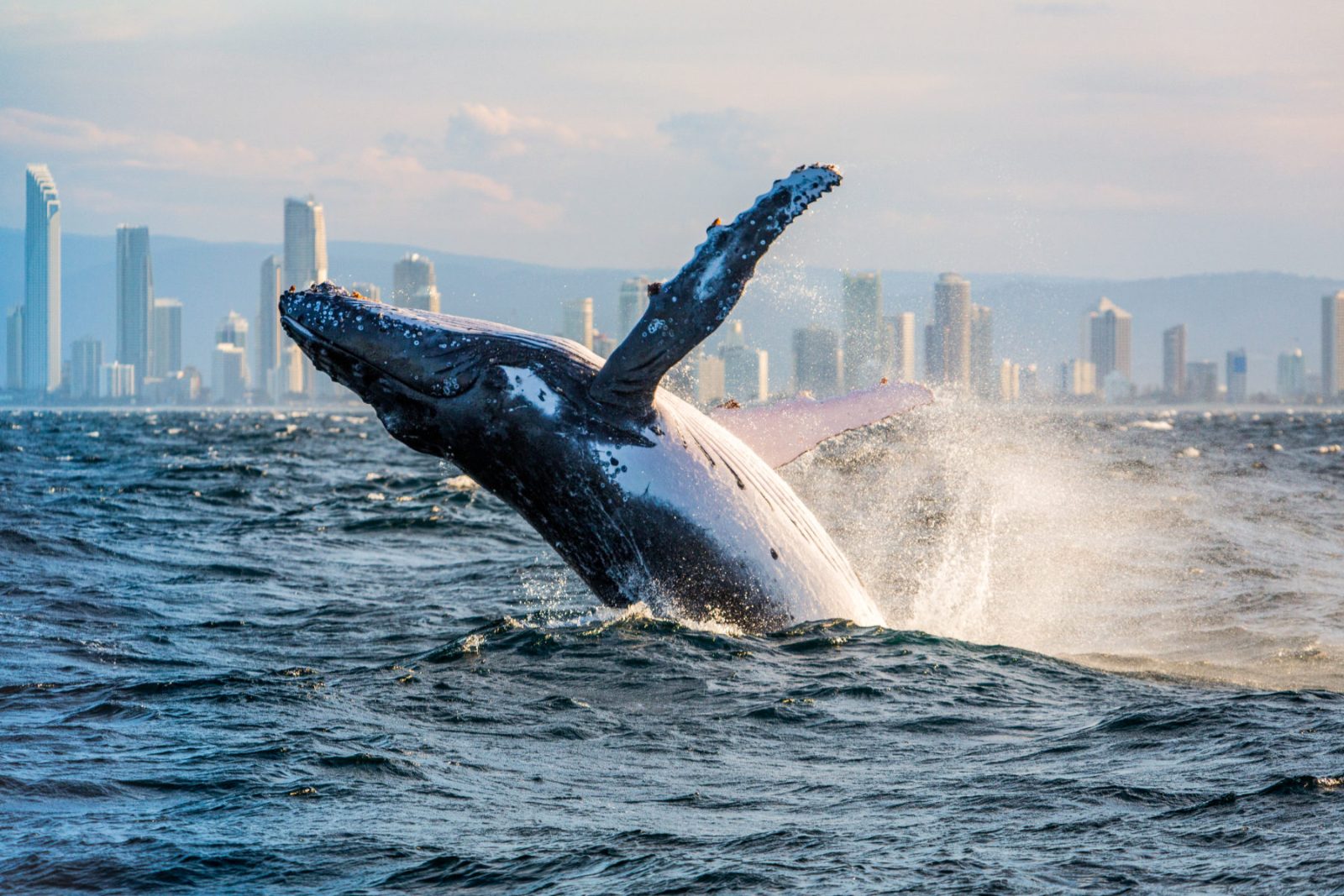
Over 30,000 humpback whales traverse the Gold Coast corridor each winter, creating a five-month observation window unmatched along Australia's eastern seaboard. The migration unfolds in two distinct pulses: northbound whales between June and August travel with purpose toward tropical breeding waters, while southbound pods from September through October move more slowly as calves build strength for the Antarctic return. The gold coast whale watching best time centres on the July-to-September core, when sighting probability exceeds 95 percent on most commercial departures. Early-season June encounters feature mature whales in tight formation, often passing within two nautical miles of the coast as they hug the continental shelf. Mid-season August brings competitive male groups and surface-active behaviour—breaching, tail slaps, and pectoral fin displays become common as whales pause their journey. Late-season September and October shift focus to mother-calf pairs, where protective mothers keep newborns close and surface intervals stretch longer. Daily timing follows predictable patterns rooted in ocean conditions rather than whale biology. Morning wind speeds average 8-12 knots along the southern Queensland coast, producing one-metre swells that allow clear underwater visibility and stable photography platforms. Afternoon sea breezes build to 15-20 knots by 14:00, creating chop that obscures surfacing whales and reduces passenger comfort. Humpbacks feed overnight in Antarctic waters but do not feed during migration, so sighting probability remains consistent across daylight hours—the limiting factor is sea state, not whale hunger cycles. Weather volatility peaks in early June and late October as subtropical systems transition between seasons. Mid-winter July and August deliver the most stable conditions: clear skies, minimal rainfall, and predictable southeasterly winds. Tour operators run daily departures throughout the season, with morning slots filling first due to sea-condition advantages. The migration corridor lies 500 metres to five kilometres offshore depending on bathymetry, placing whales within range of vessels departing Surfers Paradise, Main Beach, and Coolangatta marinas. Beaches remain free to access year-round for shore-based observation, though distance limits detail compared to vessel-based encounters.
“Over 30,000 humpback whales traverse the Gold Coast corridor each winter, creating a five-month observation window unmatched along Australia's eastern seaboard.”
Understanding Gold Coast Whale Watching Best Time Factors
The primary whale watching season in the Gold Coast occurs from June through October, during which humpback whales migrate along the coastline. Visitors are advised to target the best arrival window of 08:30–14:30, as morning tours often experience calmer sea conditions.
June–July
ModerateCool, 15–21°C
Whales begin their northward migration during these months. Activity levels steadily increase as the season progresses.
August–September
HighMild, 17–23°C
This period typically records peak whale numbers and frequent surface activity. Expect higher demand for tour departures during these months.
October
LowWarm, 19–25°C
The southward migration concludes, offering opportunities to observe mothers and calves. Water conditions remain favorable for coastal observation.
Morning hours
Moderate—
Selecting a morning departure between 08:30 and 14:30 is recommended for those seeking calmer waters. Conditions often transition as the day progresses.
Verdict: The best time for whale watching is August or September, specifically arriving within the 08:30–14:30 window to secure calmer water conditions.
A Sample Itinerary for Gold Coast Whale Watching Best Time Visits
This half-day itinerary suits visitors planning a whale watching tour during the June–October migration season. The plan spans approximately 4–5 hours from arrival to tour conclusion.
Arrive at Gold Coast Marina
Park at your chosen departure point along the Gold Coast waterfront and check in with your tour operator at least 15 minutes before departure. Facilities typically include restrooms and small cafés for pre-tour refreshments.
Board Your Whale Watching Vessel
Most morning tours depart between 9:00 and 10:00 AM when sea conditions are generally calmer. Crew will provide a safety briefing and direct you to viewing areas on deck.
Begin Offshore Whale Search
The vessel travels 1–3 nautical miles offshore where humpback whales migrate along the coast. Tours last 2–3 hours with multiple sighting opportunities as whales surface, breach, and travel in pods.
Return to Marina
The boat heads back to shore as the tour concludes. Disembarkation takes 10–15 minutes depending on passenger numbers.
Explore Nearby Beaches or Cafés
With the tour complete by midday, the afternoon remains open for coastal walks, lunch at waterfront venues, or visiting nearby Gold Coast attractions.
Standard Opening Hours for Gold Coast Whale Watching Best Time Planning
The Gold Coast whale watching operations maintain consistent daily service hours throughout the week to assist with visitor planning.
| Monday | 08:00–17:00 | |
|---|---|---|
| Tuesday | 08:00–17:00 | |
| Wednesday | 08:00–17:00 | |
| Thursday | 08:00–17:00 | |
| Friday | 08:00–17:00 | |
| Saturday | 08:00–17:00 | |
| Sunday | 08:00–17:00 |
Gold Coast Whale Watching Best Time Admission and Costs
Access to Gold Coast beaches is provided at no cost, allowing for public viewing of the coastline. Whale watching tours require individual booking and payment, as costs are determined by the specific tour operator selected.
While beach access is free, visitors pay varying rates for whale watching tours based on the specific operator and vessel chosen.
Reaching Gold Coast Whale Watching Best Time Departure Points
Gold Coast whale watching departure points are primarily located along the coastline, with most tour operators based in Main Beach or Surfers Paradise. Travelers can reach these areas via the G:link light rail, local bus networks, or by driving directly to the marina precincts.
Gold Coast Line to Nerang or Helensvale station then G:link tram
Translink services to Surfers Paradise or Main Beach stops
M1 Pacific Motorway to Surfers Paradise or Main Beach
Walk from Surfers Paradise to Main Beach marinas
Essential Prep for Gold Coast Whale Watching Best Time Trips
Prepare these items and confirmations before departure to make the most of your whale watching experience.
-
Book your tour in advance — June–October slots fill quickly during peak migration season.
-
Check weather and sea conditions — Calmer mornings between 08:30–14:30 offer smoother viewing.
-
Bring sun protection and layers — Ocean conditions shift; cover exposed skin and prepare for wind.
-
Pack binoculars and a camera — Zoom lenses capture breaching whales without disturbing marine life.
-
Carry motion sickness medication — Swells increase in open water even on calm days.
-
Wear non-slip, closed-toe footwear — Wet decks require stable footing during sudden vessel movements.
-
Confirm your booking reference — Tour operators require proof of reservation at check-in.
Check availability
Frequently Asked Questions: Gold Coast Whale Watching Best Time
Everything you need to know about gold coast whale watching best time